Simple Breathing Exercises for Seniors: Calm Your Mind, Sleep Better
Learn five gentle breathing techniques to reduce stress and improve sleep. Easy exercises you can do anywhere, anytime—no equipment needed.
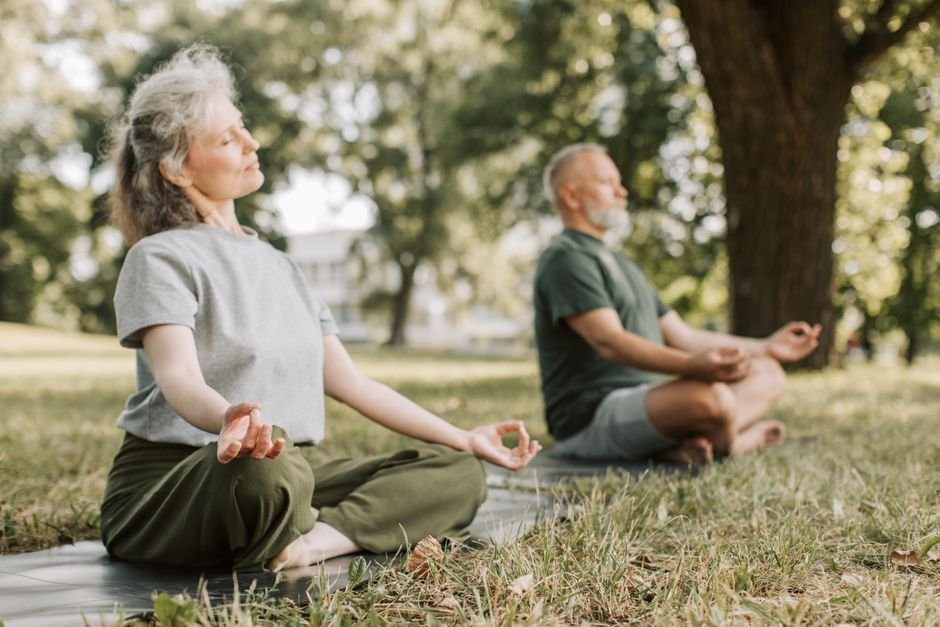
In short
- Breathing exercises trigger your body's natural relaxation response and can help reduce anxiety and improve sleep quality.
- Box breathing, 4-7-8 breathing, and alternate nostril breathing are proven techniques that take just a few minutes.
- Start with whichever method feels comfortable, practice regularly, and check with your doctor before beginning any new routine.
Why Breathing Matters for Stress and Sleep
Many of us carry stress in our shoulders and chest without even noticing. When we're anxious or worried, our breathing becomes shallow and quick, which keeps our body in a state of alert. The good news? We can reverse this pattern with simple breathing exercises.
Deep breathing using your diaphragm—the muscle below your lungs—signals your body to shift from fight-or-flight mode to a calmer state. [2] Studies suggest regular deep breathing can promote relaxation and combat stress. [2] Research has also linked deep breathing as part of daily practice to higher melatonin levels, the hormone that helps us sleep. [2]
Box Breathing: Simple and Symmetrical
Box breathing is one of the easiest techniques to remember because it uses equal counts for each step. [1] The pattern is: inhale for 4 seconds, hold for 4 seconds, exhale for 4 seconds, hold for 4 seconds. [1] Think of drawing a box as you breathe—each side of the box is one count.
This method works well because the rhythm is predictable and easy to follow. [2] The four equal steps create a balanced, box-like pattern. [2] You can do this sitting comfortably in a chair or lying in bed. Start with just a few rounds and gradually increase as it becomes natural.
The 4-7-8 Technique for Deeper Calm
If you want something a bit more powerful, try 4-7-8 breathing. [1] The pattern is: inhale for 4 seconds, hold for 7 seconds, exhale for 8 seconds, repeated 4 times. [1] The longer exhale is what makes this technique especially calming—it tells your nervous system there's no danger.
Here's how to do it: Start with an exhale, letting your breath out through your lips with a whooshing sound. [5] Then close your lips and inhale through your nose for 4 counts. Hold for 7 counts, then exhale through your mouth for 8 counts. [5] As you practice, keep your tongue toward the roof of your mouth with the tip touching the back of your two front teeth. [5] Begin with 4 repetitions, and eventually work up to 8 repetitions as you become comfortable. [3] Research shows this technique can help decrease heart rate and blood pressure. [5]
Alternate Nostril Breathing: An Ancient Yoga Practice
This technique comes from yoga and has been used for centuries to calm the nervous system. [1] It's simple: you breathe in through one nostril, then out through the other, alternating back and forth.
To try it, sit comfortably and close your right nostril with your thumb, then inhale through your left nostril. Close your left nostril and exhale through your right. Then inhale through your right and exhale through your left. Keep switching sides for about 5 minutes, and end by breathing out through your left nostril. [3] Studies have found that people who practice nasal breathing exercises report feeling calmer after the session. [2]
Other Techniques Worth Trying
Controlled breathing is another straightforward option. Breathe in through your nose for 3 seconds, hold for 3 seconds, breathe out through your mouth for 3 seconds, and hold for 3 seconds. [4] It helps to count as you breathe—say 'in, 1, 2, 3' and 'out, 1, 2, 3'—and repeat for a few minutes until you feel more relaxed. [4] You can also say a calming word in your mind like 'relax' or 'stay calm' while focusing on your breath. [4]
For sleep, bhramari pranayama involves making a humming 'Om' sound while exhaling through your nose, repeated 5 times. [3] Research from 2017 showed it may quickly reduce breathing and heart rate. [3] Three-part breathing, where you exhale twice as long as you inhale, is another option that slows your breathing and calms your mind. [3]
Getting Started: Tips for Success
Before starting any new exercise routine, check with your doctor, especially if you have heart or lung concerns. Once you have the go-ahead, pick one technique that appeals to you and practice it for a few minutes each day.
The best time to practice is when you're calm, so you can learn the pattern before using it during stressful moments. Many people find it helpful to practice in the morning or before bed. You don't need any equipment—just a quiet spot and a few minutes. If one technique doesn't feel right, try another. Everyone's body is different, and what works for your friend might not work for you.
- Start with just 2-3 minutes and gradually increase
- Practice when calm so you know the technique well
- Use counting to keep your rhythm steady
- Breathe slowly and naturally—never force it
- Try different techniques to find what suits you best
A Gentle Tool You Already Have
The wonderful thing about breathing exercises is that they're free, portable, and available anytime you need them. You can use them at home, in a waiting room, or anywhere you feel stress building. My take: these techniques work best when practiced regularly, not just when anxiety hits. Even a few minutes each day can make a real difference in how you feel.
Breathing exercises offer a natural way to support your wellbeing without pills or complicated equipment. Give yourself permission to try, practice gently, and be patient as you discover what works for you.